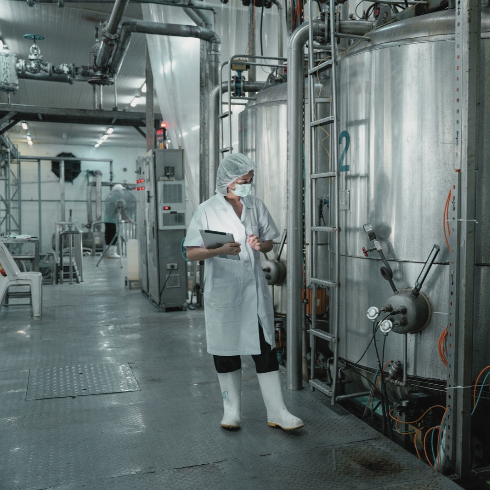
Continuous improvement teams create sustainable results when they are empowered to drive behavioural change, remove operational barriers, and embed improvements directly into daily execution on the shop floor.

Continuous improvement teams are now embedded across most manufacturing organisations in Europe. What was once considered a progressive step has become an expected part of the operating model. However, as more companies invest in building these internal capabilities, a different challenge is emerging. The presence of a continuous improvement team does not automatically translate into improved operational performance.
For many leadership teams, this creates a disconnect. There is visible activity, structured initiatives, and ongoing projects, yet the expected gains in productivity, cost, and efficiency are not consistently realised. This raises a critical question. What is limiting the impact?
A common pattern is that continuous improvement teams focus heavily on process redesign. They analyse workflows, identify inefficiencies, and introduce new standards intended to improve performance. While these efforts are necessary, they are not sufficient.
Operational results are not driven by process alone. They are driven by how effectively those processes are executed by people on the shop floor. Without consistent adoption, even well designed improvements fail to deliver lasting value. This is where many organisations encounter resistance, inconsistency, and ultimately, underperformance.
The effectiveness of continuous improvement teams is often constrained by how they are positioned within the organisation. In many cases, these teams operate without the level of authority required to influence decision making or remove cross functional barriers. As a result, initiatives slow down when challenges arise, and momentum is difficult to sustain.
At the same time, capability gaps can limit the ability to identify high value opportunities and translate them into actionable improvements. Without a strong foundation in operational problem solving and execution, teams risk focusing on incremental changes rather than transformative outcomes.
Organisations that consistently achieve lasting results take a different approach. They move beyond delivering isolated projects and instead focus on building the conditions that allow improvements to sustain.
This is where sustainability is created. Not in the design of the solution, but in how effectively it is embedded into daily operations.
As continuous improvement teams become more common, differentiation will depend on how effectively they deliver results. The organisations that succeed will be those that close the gap between intention and execution.
Leaders should assess whether their teams are equipped to influence behaviour, remove barriers quickly, and sustain improvements over time. Where gaps exist, targeted action is required to strengthen both capability and organisational alignment.
Continuous improvement has the potential to unlock significant value, but only when it is fully integrated into how the organisation operates. The next step is not to build more activity, but to ensure that every initiative drives measurable impact where it matters most.
If your organisation is not seeing the results it expected, it may be time to reassess how your continuous improvement team is set up to succeed. Get in touch with us.

Key Takeaways
Continuous improvement teams create sustainable results when they are empowered to drive behavioural change, remove operational barriers, and embed improvements directly into daily execution on the shop floor.
Schedule a 15-minute call with your Advisor

Operational Excellence
Management System + Operational Leadership

Don’t miss industry expert insights.
Join a community committed to excellence.